
Key Summary
We compiled 2,936 reviews of moles, milia and syringomas removal by Gangnam Unni and Babitalk. They are different because milia are keratin pockets near the skin surface, syringomas are benign tumors near the sweat glands that are numerous around the eyes, and moles are lesions where melanocytes gather. In the later stages, syringomas were the most frequent, and the amount of moles varied depending on the number.
- The positive-review rate was 74% (95 cases) for milia, 68% (69 cases) for syringomas, 65% (245 cases) for moles, and 58% (65 cases) for flat warts. Because the lesions were mixed in the method (device) reviews, the methods were not compared in terms of superiority or inferiority.
- Syringomas received an average of 3.2 times (37 cases), milia received an average of 2.0 times (13 cases), and moles received an average of 1.7 times (35 cases). The reviews that said it was quite painful were 20% for syringomas, 15% for milia, and 8% for moles.
- Scabs were written to remain on average for 7.5 days (28 cases), and red marks were written to remain on average for 4.8 weeks (12 cases). Of the 135 reviews that wrote about scars, 33% (45 cases) said that scars remained.
Although 67% of the 823 reviews that wrote about the effect said it was good, 95% of the reviews about Simoles were written within one month after the procedure, so it is impossible to know from the reviews what happens to recurrence and scarring.
What are the differences between moles, milia and syringomas?
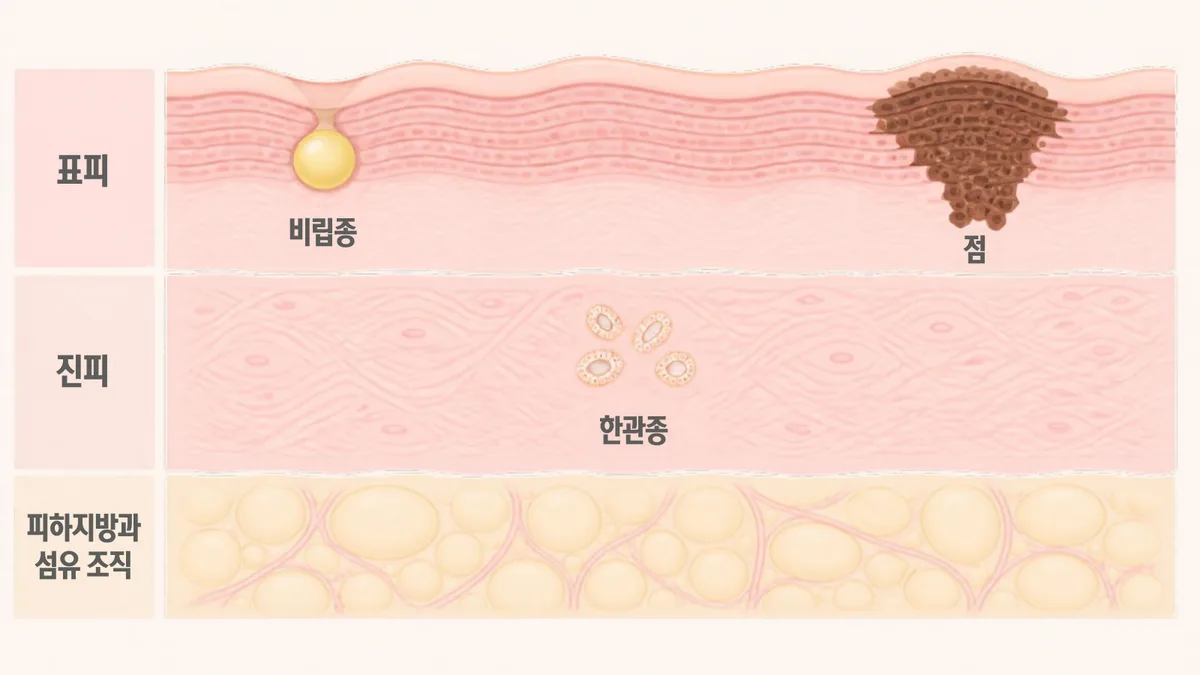
milia are white or yellow keratin pockets about 1 mm in size that form near the skin surface, syringomas are 2 to 3 mm yellow or flesh-colored small bumps gathered around the eyes, and moles are brown or black lesions where melanocytes are gathered. Seoul National University Clinic describes milia as small cysts filled with dead skin inside, and Seoul Asan Medical Center defines syringomas as 2-3 mm yellow or flesh-colored drop-shaped bumps around the eyes. They explain that these lesions commonly appear there.
| lesion | shape | A place where things happen | Parts from reviews |
|---|---|---|---|
| milia | 1mm inside and outside, white or yellow, dead skin inside | Cheeks and eyelids | full face 243 reviews, eye area 195 reviews, neck 89 reviews |
| syringomas | 2~3mm, yellow or flesh-colored, shaped like small sesame seeds | Around the eyes, chest, stomach | eye area 150 reviews, full face 99 reviews, neck 31 reviews |
| moles | Brown or black, varying in size and depth | Face, neck, body | 233 cases on the entire face, 72 cases on the neck, 57 cases on the body, 42 cases around the eyes |
Asan Medical Center in Seoul advises that milia and syringomas are similar in appearance and are classified based on their clinical features, and that syringomas are deep in the skin, leading to scarring and recurrence. Memorial Sloan Kettering researchers (Rogers, 2018) summarized that before moles are removed with a laser, it must be determined whether melanoma will not be mistaken for moles and whether some moles cells will remain.
What kind of lesions are most likely to appear in the later stages?
Moles were the most common with 1,312 cases, followed by milia with 1,135 cases, flat warts with 892 cases, syringomas with 462 cases, and skin tags with 346 cases. If there were multiple types of lesions in one review, each type was counted.
| lesion | Number of reviews | Reviews with effects | positive-review rate |
|---|---|---|---|
| moles | 1,312 cases | 245 cases | 65% (160 cases) |
| milia | 1,135 cases | 95 cases | 74% (70 cases) |
| flat warts | 892 cases | 65 cases | 58% (38 cases) |
| syringomas | 462 cases | 69 cases | 68% (47 cases) |
| skin tags | 346 cases | 7 cases | 5 out of 7 |
The effectiveness, frequency, and pain were divided into reviews written after receiving only one lesion. The number of reviews for each lesion is not an actual utilization rate because it is a sample selected in this way.
How to remove it?
Of the 420 reviews that wrote about the method, 195 wrote only laser without the name of the equipment, followed by 94 about CO2 laser, 74 about needle RF (equipment like Agnes), and 55 about extraction with a needle. If there were multiple methods in one review, each was counted.
| lesion | A review using the method | Most used methods |
|---|---|---|
| milia | 167 cases | Laser (no equipment name) 76 cases, CO2 60 cases, extraction 39 cases, needle RF 11 cases |
| syringomas | 112 cases | needle RF 67 cases, laser (no equipment name) 25 cases, CO2 17 cases, extraction 9 cases |
| moles | 156 cases | Laser (no equipment name) 95 cases, CO2 35 cases, extraction 6 cases, electrocautery 4 cases |
| flat warts | 117 cases | Laser (no equipment name) 62 cases, CO2 31 cases, extraction 27 cases |
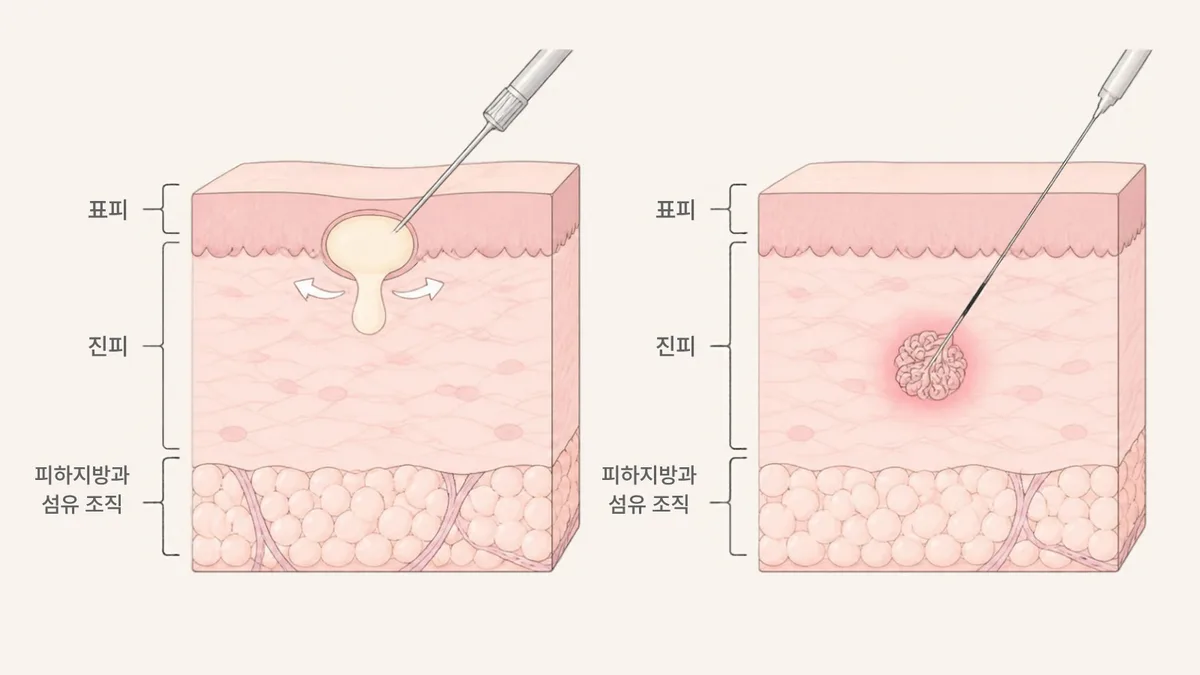
Seoul National University Clinic informs that milia are treated using needles, sharp blades, or carbon dioxide lasers, while for syringomas, Asan Medical Center uses lasers, but due to the depth of treatment, they are treated multiple times. In the review, 60% (67 of 112 cases) of syringomas were needle RF.
The positive-review rate among reviews describing an effect was 81% for extraction (13 of 16), 61% for laser without a device name (38 of 62), 58% for CO2 laser (19 of 33), and 45% for needle RF (15 of 33). Most of the needle RF reviews are about syringomas, so the number is a mix of differences in lesions, not differences in method.
How did syringomas look in the study?
In a study on syringomas, the removal rate increased with each series of needle RF and electrocoagulation, and 86% (25 out of 29 patients, 30 out of 35 patients) showed an improvement of more than 26% after two sessions with CO2 laser. The studies were all about lesions around the eyes and were small-scale.
| Research | What and how | Results |
|---|---|---|
| Ahn GR et al., Aesthet Surg J 2021 | Retrospective analysis of 55 patients with periorbital syringomas, insulated microneedle radiofrequency | After one session, 50.9% showed clear improvement, the clearance rate increased with each session, and there were no lasting adverse reactions other than temporary redness and scabs. |
| Lee SJ et al., J Cosmet Laser Ther 2015 | 29 people, CO2 pinhole method twice, 2 months apart | 24.1% improved by more than 75%, 34.5% improved by 51-75%, 27.6% improved by 26-50%, and 13.8% improved by 0-25%. |
| Cho SB et al., Dermatol Surg 2011 | 35 people, CO2 fractional treatment twice, 1 month apart | 51-75% improvement was 42.9%, 26-50% improvement was 34.3%, and over 75% improvement was 8.6%, and the number of moles improved slightly at 4 months. |
| Kitano Y et al., J Cosmet Laser Ther 2016 | 49 people, repeat Erbium Yag every 2 months | After an average of 3.77 sessions, more than 75% of the symptoms disappeared in 43 out of 49 patients. |
| Al Aradi IK et al., Dermatol Surg 2006 | 20 cases, low-voltage electrocoagulation | Eleven out of 18 patients (60%) had more than 70% removed, and common adverse reactions were burning, swelling, redness, and pigment changes. |
| Alsaidan MS et al., J Dermatolog Treat 2022 | Review of laser syringomas research, Part 27 | The CO2 pinhole method and the multiple puncture method were effective and had few adverse reactions, and there was no agreement on the optimal settings, so a large clinical trial was needed. |
As for moles, which are received multiple times rather than all at once, reviews (3.2 times on average) and research are in the same direction. However, because the equipment and intervals (1 month, 2 months) are different for each study, the paper does not provide guidelines on how many times or how many months the interval is appropriate.
How many times did you receive each lesion?
The average number of syringomas was 3.2 (37 cases), with 11 cases occurring once, 10 cases occurring twice, and 16 cases occurring three or more times. For moles, the average was 1.7 times (35 cases), with 21 cases once, and for milia, the average was 2.0 times (13 cases).
| lesion | Reviews written several times | average | 1st time | Episode 2 | 3 or more times |
|---|---|---|---|---|---|
| syringomas | 37 cases | 3.2 times | 11 cases | 10 cases | 16 cases |
| milia | 13 cases | 2.0 times | 3 cases | 8 cases | 2 cases |
| moles | 35 cases | 1.7 times | 21 cases | 11 cases | 3 cases |
The average of 85 moles reviews was 15.3, 43 (51%) had 5 or less, 36 (42%) had 6 to 30, and 6 (7%) had more than 30. Retouching, in which the same lesion was removed again, accounted for 44 (12%) of the 359 cases for which this article was written. There were only 5 reviews that used spacing, so I didn't average them.
How much pain was there and how was the anesthesia administered?
Of the 811 cases that reported pain level, 455 (56%) said it was barely painful, 231 (28%) said it was bearable, and 125 (15%) said it was quite painful. The reviews that said it was quite painful were 27% for flat warts, 20% for syringomas, 15% for milia, and 8% for moles.
| lesion | A review that describes the level of pain | It almost didn't hurt | It was bearable | It was quite painful |
|---|---|---|---|---|
| moles | 225 cases | 65% | 28% | 8% |
| milia | 61 cases | 66% | 20% | 15% |
| syringomas | 56 cases | 48% | 32% | 20% |
| flat warts | 74 cases | 45% | 28% | 27% |
Of the 374 cases in which anesthesia was used, 320 cases (86%) used topical anesthetic cream, 42 cases (11%) used local anesthesia, and 12 cases (3%) said they received it without anesthesia.
scabs, red marks, how are the scars left?
Scabs or ooze remained for an average of 7.5 days (28 cases), and red marks remained for an average of 4.8 weeks (12 cases). Of the 135 cases where scars were recorded, 50 cases (37%) had no scars, 40 cases (30%) had faint marks, and 45 cases (33%) had scars.
Among the 49 reviews for moles, 27% (13) said that a scar remained, and for flat warts, 7 out of 9 reviews said that hyperpigmentation occurred. There were a total of 26 reviews about hyperpigmentation, and 23 of them said that hyperpigmentation occurred. This number is not a percentage of all users because it is a separate post about what happened.
What were the uncomfortable moles after the procedure?
Of the 2,936 reviews, the most common complaints were pain in 67 cases (2.3%), scarring in 49 cases (1.7%), and redness in 48 cases (1.6%). There were 25 posts about recurrence, and 22 cases each of hyperpigmentation and bleeding.
| Reported inconvenience | Number of reviews | ratio |
|---|---|---|
| pain | 67 cases | 2.3% |
| scar | 49 cases | 1.7% |
| blushing | 48 cases | 1.6% |
| Relapse | 25 cases | 0.9% |
| hyperpigmentation | 22 cases | 0.7% |
| Bleeding | 22 cases | 0.7% |
| Itching | 13 cases | 0.4% |
| swelling | 9 cases | 0.3% |
There were 85 reviews that mentioned relapse, and 79 of them were about relapse. Most reviews do not mention recurrence, so this number is not a recurrence rate. There were 135 (6.4%) reviews out of 2,114 cases that said they regretted or did not recommend, and by lesion, they were 6.3% (36 cases) for moles, 4.3% (8 cases) for milia, 7.0% (8 cases) for syringomas, and 7.4% (14 cases) for flat warts.
How much does it cost to remove moles, milia and syringomas?
The amount written in the reviews was an average of about 14,000 won per mole (21 cases), an average of 225,000 won per bundle of moles (21 cases), an average of 79,000 won for milia (146 cases), and an average of 165,000 won for syringomas (93 cases).
| lesion | amount unit | average | Number of reviews |
|---|---|---|---|
| moles | per piece | Approximately 14,000 won | 21 cases |
| moles | count bundle | Approximately 225,000 won | 21 cases |
| moles | bundle of parts | Approximately 125,000 won | 8 cases |
| milia | Payment amount without unit | Approximately 79,000 won | 146 cases |
| syringomas | Payment amount without unit | Approximately 165,000 won | 93 cases |
| flat warts | bundle of parts | Approximately 382,000 won | 15 cases |
| flat warts | Payment amount without unit | Approximately 277,000 won | 139 cases |
The review amount is the payment amount written on the platform, so it includes the event, first visit price, and whether or not retouch is included, and is not the same standard as the clinic's published price. The price of the same procedure varies greatly depending on whether it is a unit price, a bundle of numbers, or a bundle of parts, so the price of moles varies depending on the number of moles.
What lesions had a high positive-review rate in DermaFocus' review of moles, milia and syringomas?
Based on reviews, the lesion with the highest positive-review rate was milia (74%), followed by syringomas (68%) and moles (65%), and the lesion with the fewest reviews of being quite painful was moles (8%). Flat warts (58%) were excluded from the comparison as they are not the topic of this article.
The most common compositions in the reviews according to my concerns are as follows.
| Concerns written in reviews | How we received the most reviews | positive-review rate (effective reviews) | It was quite painful | Average number of reviews |
|---|---|---|---|---|
| White millet (milia) around the eyes or face | Laser, CO2, extraction | 74% (95 cases) | 15% | 2.0 times |
| Flesh-colored bumps around the eyes (syringomas) | needle RF | 68% (69 cases) | 20% | 3.2 times |
| moles of face and neck | Laser, CO2 | 65% (245 cases) | 8% | 1.7 times |
- milia had the highest positive-review rate at 74%, with an average of 2.0. Among the 167 cases that used the method, 39 cases (23%) were extractions.
- Syringomas were the most frequent with an average of 3.2, and 20% of reviews said they were quite painful. In the reviews, needle RF was 60%, and in the study, the removal rate increased with each treatment.
- The price of moles varied depending on the number of moles, and in the reviews, the average was about 14,000 won per piece, and the average for a bundle was about 225,000 won. Reviews that left scars accounted for 27% of the 49 cases that left scars.
There are also other methods with good reviews. As for extraction, 13 out of 16 (81%) reviews said it was good, but only a small number of reviews focused on milia.
67% of the reviews that wrote about the effect said it was good, but most of them were written right after the procedure. This comparison is based on reviews, not medical superiority or inferiority, and the results of the procedure vary from person to person, so the ratio of reviews does not guarantee the results. The medical staff must first determine whether moles can be distinguished from melanoma before removal, so first confirm what the lesion is during the consultation.
What should I ask during a removal consultation?
Start by asking whether my lesion is moles, milia, syringomas, or flat warts. Because the external appearance is similar, the names of the lesions were mixed in the reviews, and the method and frequency were different depending on the lesion.
| What to check | Questions to Ask |
|---|---|
| lesion | What is my lesion and how was it identified? Do moles require biopsy or confirmation before removal? |
| method | Is it extraction, CO2 laser or needle RF? Why this way? |
| Count and Interval | How many times and at how many months intervals do I receive it? What if it doesn't go away all at once? |
| Pain and anesthesia | Is it numbing cream or local anesthesia? How much does it hurt? |
| recovery | How many days or weeks do scabs and red marks last? What to do if hyperpigmentation occurs? |
| Relapse and Retouch | Are there any additional costs if it recurs? Is retouching included? |
| price | Is it per piece, a bundle of pieces, or a bundle of parts? Is VAT included? |
| Actual practitioner | Does the doctor I consult perform the procedure themselves? |
DermaFocus compares moles, syringomas removal clinics like this
The recommendation guide applies the same four criteria to all clinics.
| Comparison Items | Verification criteria |
|---|---|
| Treatment information | Information on methods and equipment for each lesion, frequency and interval, recurrence and scar information disclosed or not |
| medical staff | Specialist qualifications and actual practitioners confirmed by official sources |
| cost | Confirmation date, VAT, price conditions, per piece and bundle basis |
| Reviews | Repeated mention of platform-specific sources and moles, consultation and explanation |
The number of reviews and specialist qualifications are not used as the number of moles that guarantee the treatment results. The role of a recommendation guide is to display confirmed facts side by side using the same standards.
How this article was checked
The DermaFocus editorial team organized the reviews and research papers, and they were not supervised by medical professionals. This article does not constitute a medical diagnosis or recommendation for treatment, so please consult with a medical professional to determine whether and how to perform the procedure.
- Review: We classified 3,499 randomly sampled cases by lesion in the Gangnam Unni moles removal, moles subtraction, milia, syringomas review and Babitalk review (as of October 9, 2026). Among them, 2,936 reviews of removal procedures for moles, milia and syringomas, skin tags, and flat warts are the subject of this article.
- Analysis criteria: The effect, number of times, and pain by lesion are based on reviews of only receiving one lesion, the method is based on 420 reviews using the method, and the scarring is based on 135 reviews writing about whether or not there is a scar. The price is based on reviews with the amount written.
- Studies: There are 6 syringomas treatment studies in PubMed (Ahn 2021, Lee 2015, Cho 2011, Kitano 2016, Al Aradi 2006, Alsaidan 2022) and 1 moles laser removal expert paper (Rogers 2018). Only the abstracts were checked. For lesion definitions, we checked Seoul National University Clinic's milia medical information and Seoul Asan Medical Center's syringomas health information.
- Price: This is the payment amount written in the review. The average amount was only between 1,000 won and 3 million won, and the clinic's publicly disclosed prices were not included in this article.
- Limitations: 95% of reviews written about Simoles were written within 1 month after the procedure. The number of reviews per lesion is a result of the sample design, so it is not a rate of use, and the superiority and inferiority of the methods were not compared because there were few reviews for each method.
- Personal Information: The original text of the review, the author, and the name of the clinic are not included.
Frequently Asked Questions
How are moles, milia and syringomas distinguished and removed?
Milia are white or yellow keratin pockets about 1 mm in size, syringomas are yellow or flesh-colored protrusions of 2 to 3 mm, which are common around the eyes, and moles are brown or black lesions. In the later reviews, milia received extraction or laser (average 2.0 times), syringomas received 60% needle RF (average 3.2 times), and moles received laser (average 1.7 times).
How many treatments should I have for syringomas?
In the reviews, the average was 3.2 times (37 cases), with 11 cases once, 10 cases twice, and 16 cases three or more times. In the study, 50.9% showed clear improvement after one session, and the removal rate increased with each session.
Can I get rid of milia by squeezing it?
Extraction was used in 39 of the 167 milia reviews (23%) in the reviews, and the positive-review rate of extraction was 13 out of 16. Seoul National University Clinic advises that milia is treated using needles, sharp blades, or carbon dioxide laser.
Will removing moles leave a scar?
Among the 49 reviews about moles about scars, 18 had no scars, 18 had faint marks, and 13 had scars (27%). Most of the posts were written immediately after the procedure, so the final scar cannot be known from the review.
What is the difference between syringomas and milia?
Milia are keratin pockets near the epidermis, while syringomas are lesions located deep inside the skin, near the sweat glands, so the type and number of lesions vary. In the later stage, syringomas required needle RF at 60%, with an average of 3.2 times, and milia required a lot of laser and extraction, with an average of 2.0 times.
Does mole removal hurt?
Of the 225 moles reviews that wrote about the level of pain, 65% said it was barely painful, 28% said it was bearable, and 8% said it was quite painful. Anesthetic cream was used in 86% of the 374 cases in which anesthesia was used.
How long do scabs and red marks last after the procedure?
In the review, it was said that scabs remained for an average of 7.5 days (28 cases) and red marks remained for an average of 4.8 weeks (12 cases). There were 23 articles out of 26 that stated whether hyperpigmentation occurred.
Will it happen again?
You can’t tell from the reviews. 95% of the reviews written about Simoles were written within 1 month after the procedure, and 79 out of 85 cases of recurrence were written about recurrence, but this is not the recurrence rate. Asan Medical Center in Seoul advises that because syringomas are deep, there is a possibility of scarring and recurrence.
How much does moles, milia and syringomas removal cost?
The average price written in the reviews was about 14,000 won per mole, about 225,000 won for a bundle of moles, about 79,000 won for milia, and about 165,000 won for syringomas. The payment amount is a mixture of per piece, piece bundle, and part bundle.
Sources and verification dates
- Ahn GR et al. Electrocoagulation within periorbital syringomas isolated microneedle lesion, Aesthet Surg J 2021 (PMID 31630165)(confirmed 2026-10-09): 55 patients, 50.9% marked improvement after 1 session, no persistent adverse reactions
- Lee SJ et al. CO2 laser pinhole method for syringomas around the eyes, J Cosmet Laser Ther 2015 (PMID 25803568)(confirmed 2026-10-09): 29 patients, twice at 2-month intervals, 75% or more improvement 24.1%
- Cho SB et al. Prospective analysis of CO2 fractional laser syringomas treatment, Dermatol Surg 2011 (PMID 21414069)(confirmed 2026-10-09): 35 patients, twice at 1-month intervals, 51-75% improvement, 42.9%
- Kitano Y et al. Erbium YAG laser oval excision for periorbital syringomas, J Cosmet Laser Ther 2016 (PMID 26963492)(confirmed 2026-10-09): 49 patients, more than 75% disappearance in 43 patients after an average of 3.77 sessions
- Al Aradi IK et al. Periorbital syringomas, low-voltage electrocoagulation, Dermatol Surg 2006 (PMID 17034373)(confirmed 2026-10-09): 20 cases, 11 of 18 patients >70% removed
- Alsaidan MS et al. Review of syringomas laser effectiveness and safety, J Dermatolog Treat 2022 (PMID 36125344)(confirmed 2026-10-09): 27 studies, effects of pinhole method and multiple perforation method, no consensus on optimal settings
- Rogers T et al. Practical considerations for moles and lasers, Lasers Surg Med 2018 (PMID 29159963)(viewed 2026-10-09): Melanoma misidentification, residual nevus cells, and tracking difficulties.
- Seoul National University Clinic medical information. milia (milium)(Checked 2026-10-09): White or yellow dead skin pockets around 1 mm in size, treatment involves needles, sharp blades, and carbon dioxide laser.
- Seoul Asan Medical Center health information. syringomas (Syringoma)(Checked 2026-10-09): 2~3mm yellow or flesh-colored, deep, possibility of scarring and recurrence, treated multiple times
- Gangnam Unni review and Babitalk review (platform review, confirmed 2026-10-09): Based on sample classification of 3,499 moles, milia and syringomas reviews. The original text of the review is not included.
Editorial responsibility and relationships
DermaFocus has no advertising, contract, or affiliation with any of the clinics or manufacturers mentioned in this article, and has not received any money or sponsorship. This article is a compilation of information needed to select a procedure and does not replace a personal diagnosis or treatment plan.