
Key Summary
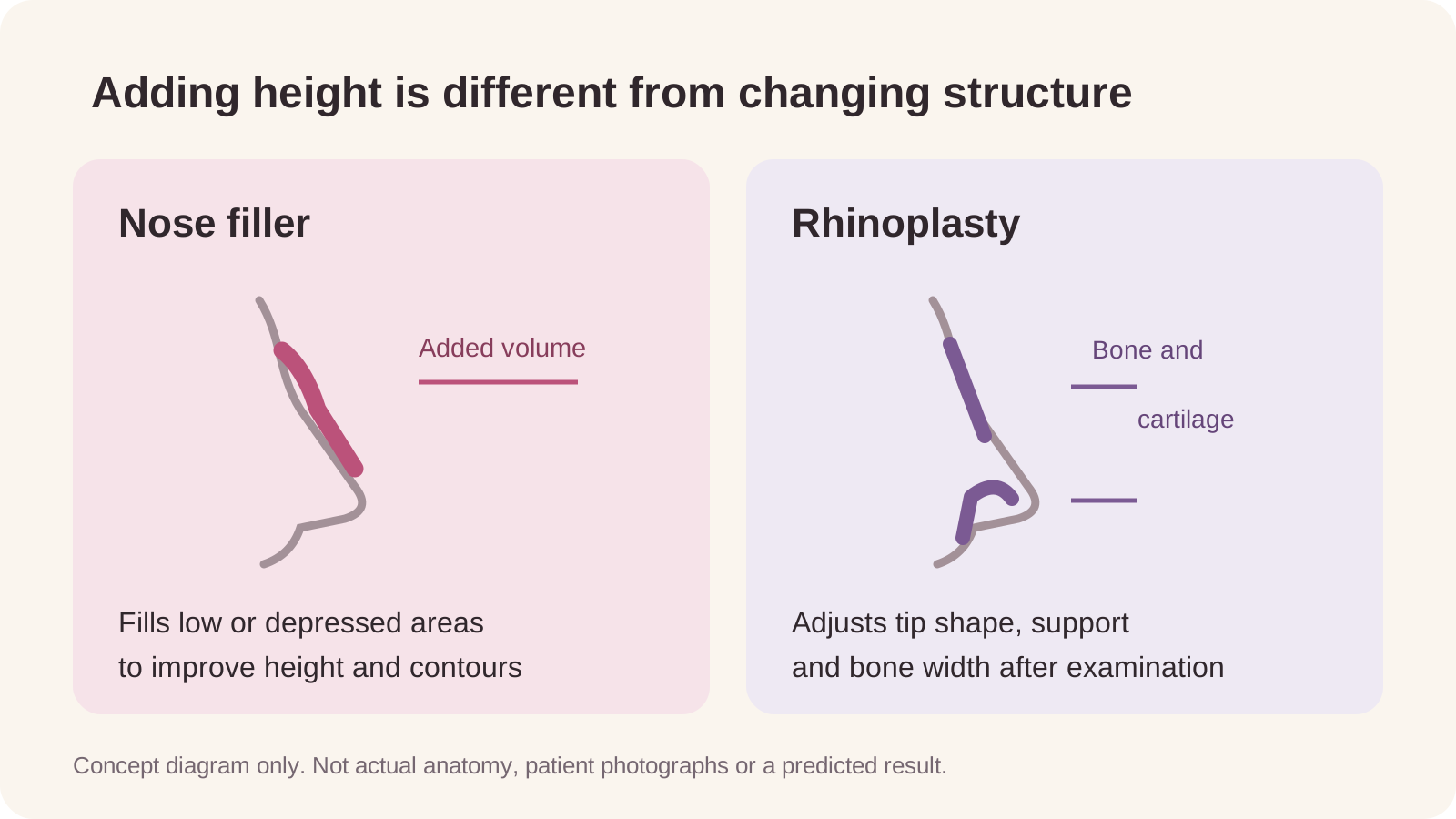
Nose filler adds volume to improve bridge height and contours, while rhinoplasty changes height and shape by working on cartilage and bone. Making a bulbous tip smaller is different from raising the bridge. Filler involves maintenance and repeat treatment; surgery involves recovery and the burdens associated with the materials used.
How do nose filler and rhinoplasty differ?
Filler adds volume where it is lacking; rhinoplasty changes the nasal structure. Hyaluronic acid filler fills a low bridge or depressed area. It is also used to smooth small contour irregularities and adjust tip height and appearance.
Depending on the desired change, rhinoplasty raises the bridge or adjusts bone width, tip cartilage shape and support. Implants or the patient's own tissue are used for the bridge, and septal, ear or rib cartilage for the tip. Materials and incisions are selected for the nose being treated. Kowon Plastic Surgery's bulbous-tip guide
| Comparison | Nose filler | Rhinoplasty |
|---|---|---|
| Main change | Adds volume to improve height and contours | Adjusts height, bone and cartilage shape |
| Tip or nostril-base reduction | Does not remove tissue | Surgery tailored to the cause |
| Maintenance | Repeat treatment depending on product and injection site | Long-term structural change |
| Main burdens | Bruising, swelling, repeat cost and vascular complications | Anesthesia, recovery, scarring and revision risk |
Can filler correct a low bridge and a bulbous tip together?
Filler can raise the bridge, but it does not physically make the tip smaller. Cleveland Clinic's explanation of filler treatment scope
A broad tip has different causes. Examination distinguishes widely spread tip cartilage, thick skin and underlying tissue, and a wide nostril base.
| Appearance that concerns you | What to examine | What to ask |
|---|---|---|
| Only the bridge looks low in profile | Bridge height relative to the tip | Would changing only the bridge achieve my goal? |
| The tip looks round and wide from the front | Tip cartilage and skin thickness | Do I need more height, less width or both? |
| The nostril base also spreads widely | Alar width and nostril shape | Would I still need alar reduction after tip correction? |
| The tip is low, short or drooping | Cartilage support and nose length | Does the tip need support or lengthening? |
Be cautious about promises to make thick skin behave like thin skin. Kobijou Clinic explains that thick skin limits visible definition even after cartilage is brought together, and excessive removal of underlying tissue affects blood supply. Ask, “With my skin thickness, how much narrowing is realistic, and how will breathing be protected?” Kobijou Clinic's explanation of different causes
What did reviewers like or find disappointing?
Filler reviewers described satisfaction with a quick bridge change, while surgery reviewers described satisfaction with changes extending to the tip. Other filler accounts described disappointing bridge-to-tip balance or a change that faded over time.
One Gangnam Unni filler reviewer liked the bridge change 30–40 minutes after treatment. Tightness and swelling were still present then.
Gangnam Unni, nasal-tip filler, updated July 29, 2026
지금 5개월 지났는데 많이 사하졌어요
English translation: It has been five months now, and a lot of it has disappeared.
Source: Review in Gangnam Unni's nose-filler search. A short excerpt; the Korean spelling is unchanged.
The reviewer initially described the anesthetic injection as not very painful, then wrote at five months that only a little seemed to remain in the bridge.
Babitalk, previous nose filler followed by surgery, procedure date not entered
콧대만 오히려 높아져서 남성적인 느낌이 들더라구
English translation: Instead, only the bridge became higher, which gave it a masculine look.
Source: Review in Babitalk's nose-filler search. A short excerpt.
This reviewer wrote that the tip remained low after filler, leaving the overall shape disappointing, and later underwent rhinoplasty.
When reading reviews, check what changed in front and side views, when the account was written, and whether threads or other filler treatments were combined. Nose-filler search results also contain chin-filler and surgical reviews.
How did actual clinic cases address the bridge and tip?
Jungwoo Plastic Surgery Clinic published a case correcting a low, short nose with an upturned tip. The patient wanted a higher nose, a change to the upturned tip and an appearance in which the mouth looked less prominent. The clinic describes using silicone for the bridge and septal cartilage for the tip, while adjusting nose length and the angle beneath the nose.
The clinic describes changes in tip height and profile proportions in its photographs. Published October 15, 2024, the case shows two-month postoperative progress. The mouth appeared less prominent; the operation did not move the teeth or jaw backward. Jungwoo Plastic Surgery Clinic's official case
If you also want to change both areas, ask, “How would my front and side views differ with bridge augmentation alone versus bridge and tip correction?” This patient also had a short, upturned nose, so the surgical scope differs from an isolated rounded tip.
Kobijou Clinic separately presents bulbous-tip cases involving thick soft tissue, thick skin and spread cartilage. The photographs are 15–18 days apart and show early progress. The clinic describes selecting cartilage correction, tissue adjustment and alar reduction according to the cause. Individual patients' detailed surgical techniques are not disclosed, so photographs alone do not identify those techniques. Kobijou Clinic's cases and explanation
How long does nose filler last, and does rhinoplasty last for life?
Filler is temporary augmentation; surgery produces longer-lasting structural change. Describing all filler as lasting “1–2 years” or surgery as keeping exactly the same shape for life does not reflect actual follow-up.
Cleveland Clinic describes nose filler as lasting about six months. A study summarized by the American Society of Plastic Surgeons describes 9–12 months of maintenance, with some patients not needing additional treatment even at 24 months. Products, quantities, injection sites and goals differ, as do duration estimates. Cleveland Clinic, ASPS study summary
Do not repeat filler simply because a scheduled interval has passed. Have the nose examined for loss of the desired height, spreading or remaining filler first. Rhinoplasty results last longer, but the nose and face continue to age, and infection or shape problems sometimes lead to revision. ASPS rhinoplasty results
Can I try filler first and have surgery later?
Surgery is performed after previous filler, but discuss an existing surgical plan before adding filler. A filler-enhanced nose does not reliably predict its appearance after surgery.
Babitalk, rhinoplasty, procedure date July 20, 2026
코필러는 수술 전에 녹이고 수술 받았구요
English translation: I had the nose filler dissolved before having surgery.
Source: Rhinoplasty review included in Babitalk's nose-filler search. A short excerpt.
The reviewer had previously received Hiko threads and nose filler and described dissolving the filler before surgery. Removal timing and the operation are planned around the product and what remains.
Doyjun Plastic Surgery explains that remaining hyaluronic acid filler affects shape and surgery, prompting a discussion of removal. The surgeon describes removal usually 1–2 weeks beforehand and, in selected circumstances, on the day of surgery. Do not treat that interval as everyone's schedule. Tell your surgeon the product, dates, number of treatments and any thread procedures. Doyjun Plastic Surgery's Q&A
Hyaluronic acid filler is reduced with an enzyme injection, but not every injected material dissolves the same way. Removal involves additional treatment and cost and does not guarantee an exact return to the pre-injection appearance. If you do not know the product, request your records from the previous clinic. FDA filler-removal and risk information
Can I work immediately after filler, and recover from surgery in 1–2 weeks?
Returning to work, losing major swelling and settling into the final tip contour happen at different times. Filler generally involves less recovery than surgery, but bruising, swelling and tenderness still occur. Muse Clinic Anyang describes a 20–30-minute nose-filler procedure. Ask about consultation, anesthesia and waiting time when planning your visit. Muse Clinic Anyang's treatment guide
Surgery requires plans for anesthesia, going home, splint and stitch removal, and follow-up. Kowon Plastic Surgery describes stitch removal at 5–7 days, major swelling over 2–3 weeks and tip definition settling over six months to one year. Kowon Plastic Surgery's recovery guide
Gangnam Unni, bulbous-tip surgery, updated October 15, 2026
2달차 부터 큰 붓기 가라앉고 직반라인 자려하게 나왔다 확신이 들었는데요.
English translation: From the second month, the major swelling subsided, and I felt sure the gently curved profile had turned out well.
Source: Gangnam Unni's bulbous-tip reviews. A short excerpt; the Korean spelling is unchanged.
This reviewer described early nasal blockage and discomfort from wearing a splint for a week, followed by satisfaction with the shape around two months. The earlier Babitalk surgery reviewer also described less swelling from two weeks and satisfaction at one month, with residual swelling remaining.
ASPS explains that initial swelling subsides over weeks while contours continue changing for up to a year. Ask separately about work, photographs or a wedding, exercise, and wearing glasses again. Activities that put pressure on the face have different requirements from routine desk work. ASPS recovery and activity guidance
What are the risks of nose filler and rhinoplasty?
Filler should not be treated as merely a simple cosmetic injection. Nasal injections carry serious risks, including blocked blood vessels, skin injury and loss of vision. Surgery involves anesthesia, infection, scarring, breathing difficulties, altered sensation, an unsatisfactory shape and revision risk.
A 2020 study of 5,000 nose-filler patients treated by one practitioner reported swelling or redness in about half, two infections and three cases of localized skin necrosis. These are one practitioner's records, not complication rates applicable to every clinic or individual. Nose-filler study, PMID 32097303
During or immediately after filler, report unusually severe pain, white, gray or blue skin, blurred vision or any visual change to the clinician immediately and seek emergency care. Do not wait for swelling to settle. FDA warning signs
For surgery, ask about breathing, scars and material-related problems as well as appearance. Implant-free surgery still involves anesthesia and operating on tissue; it is not risk-free. ASPS rhinoplasty safety information
How much do nose filler and rhinoplasty cost?
Compare filler by product and volume, and surgery by the total covering the areas, materials and anesthesia. These are published examples from particular clinics, not national averages or individual patients' final bills.
| Clinic and item | Price including VAT | Listed conditions |
|---|---|---|
| Muse Clinic Anyang, Korean-made nose filler, 1cc | KRW 220,000 | Standard option; ask for the product name |
| Muse Clinic Anyang, Belotero nose filler, 1cc | KRW 385,000 | Standard option, 1cc |
| Abelle Clinic, bridge surgery | KRW 1,100,000 | Listed fee for one procedure item |
| Abelle Clinic, tip surgery | KRW 1,500,000 | Listed fee for one procedure item |
| Abelle Clinic, full rhinoplasty | KRW 2,220,000 | Listed item; discuss the exact surgical scope |
Checked October 25, 2026. Muse Clinic Anyang lists KRW 200,000 and KRW 350,000 before VAT. Abelle Clinic's table is dated August 18, 2026 and states that taxable items include VAT. Muse Clinic Anyang prices, Abelle Clinic's non-covered fees
Abelle Clinic separately lists sedation at KRW 200,000 and hyaluronidase treatment at KRW 55,000 for filler placed there or KRW 110,000 for filler placed elsewhere. Ask whether these are included in your surgical quote. Do not add the bridge and tip items together and assume that sum is the full-rhinoplasty fee.
Compare 1cc filler prices alongside the product name. For surgery, check tip cartilage, additional osteotomy or alar reduction, anesthesia and tests, filler or thread removal, and follow-up or revision conditions. If planning repeated filler, ask about touch-up and removal costs too.
What should I ask at the consultation?
- To achieve my goal, should bridge height, tip width or both change?
- Is the bulbous appearance caused by cartilage, skin or the nostril base?
- What change is realistic from the front and side, and what is difficult to change?
- For filler, what product and amount are planned, how is remaining filler assessed, and how are vascular emergencies handled?
- For surgery, why are these materials and incisions needed, and do I need both tip correction and alar reduction?
- With previous filler, Hiko threads or nose surgery, how should removal and surgery be timed?
- What is the total including VAT, anesthesia, tests, cartilage harvesting, follow-up and touch-ups?
- When are splint or stitch removal, work, exercise and glasses planned, and whom should I contact about abnormal symptoms?
Bring reference photographs and specify bridge height, tip width or nostril exposure rather than saying only “natural.” Mention nasal blockage during the cosmetic consultation too.
How should my desired change and recovery schedule affect the decision?
If you like the tip and only want a slightly higher bridge, discuss filler position and volume, including the risk of looking wider. Decide whether a small change is your goal.
If both a low bridge and a broad tip from the front concern you, have the skin, cartilage and nostril base examined during a surgical consultation. Choosing surgery does not mean every area must be operated on at once.
If you cannot take much leave or find surgery burdensome, consider whether filler's limits meet your goal. If the goal is to reduce tip size, postponing treatment is also an option instead of continuing to add filler.
If surgery is already planned or you have had filler repeatedly, show the surgeon your previous treatment records before any new injection.
Conclusion
Improving a low bridge and reducing a bulbous tip are different goals. Decide whether you want more height alone or a change to the tip too, and discuss both front and side views. Decide after hearing a plan that covers repeat treatment and removal for filler, or the required correction and recovery for surgery.
Frequently Asked Questions
What is the difference between rhinoplasty and nose filler?
Filler improves height and contours with an injected material, while rhinoplasty adjusts structures such as bone and cartilage. Physically reducing the nose or bringing tip cartilage together is different from adding filler.
What are the disadvantages of nose filler?
It does not physically reduce the tip or nostril base, and maintaining the result involves considering repeat treatment. Discuss bruising, swelling and dissatisfaction with shape, as well as vascular occlusion, skin necrosis and vision loss.
What happens if I have nose filler repeatedly?
Adding more without assessing remaining product and the current shape risks excessive volume or width rather than the desired height. Have the previous product, number of treatments and remaining material assessed first.
Does a bulbous tip always require alar reduction?
The cause of a bulbous tip and the width of the nostril base are assessed separately. Any remaining alar flare and nostril shape after tip correction inform whether to combine procedures.
Can surgery make a thick-skinned bulbous nose more defined?
Thick skin and soft tissue limit visible contour change even when cartilage is brought together. Discuss realistic change while preserving blood supply and breathing rather than relying on aggressive tissue removal.
If I dislike filler, will dissolving it restore my original nose?
Hyaluronic acid filler is reduced with an enzyme treatment. Removal depends on the product and placement; not all injected materials dissolve, and complete restoration of the pre-treatment appearance is not guaranteed.
How soon after nose filler can I have surgery?
The surgeon examines the product, remaining filler and skin before planning removal and surgery. A particular clinic's “1–2 weeks after removal” guidance is not a universal interval.
Is all swelling gone two weeks after rhinoplasty?
Major swelling and residual tip swelling settle at different times. Contours change for months even after a return to work, so discuss important photographs or events separately.
What features make a nose suitable for rhinoplasty?
A photograph or the label “bulbous nose” does not predict the result. Examination must relate skin thickness, cartilage size and support, previous surgery and the desired change to the actual surgical scope.
Sources and verification dates
- Cleveland Clinic, nonsurgical rhinoplastypatient guidance on scope, duration and risks. Checked October 25, 2026.
- Retrospective nose-filler study, PMID 320973032020 analysis of 5,000 patients treated by one practitioner, not a direct comparison with surgery. Checked October 25, 2026.
- ASPS study summaryprocedure time and maintenance in that study. Checked October 25, 2026.
- FDA dermal-filler guidancevascular complications, emergency signs and removal precautions. Checked October 25, 2026.
- ASPS rhinoplasty recoverysplints, swelling and return to activities. Checked October 25, 2026.
- ASPS rhinoplasty resultslong-term changes and aging. Checked October 25, 2026.
- ASPS rhinoplasty safetyanesthesia, infection, breathing and revision risks. Checked October 25, 2026.
- Kowon Plastic Surgery's bulbous-tip guidetip versus alar assessment and that clinic's recovery guidance. Checked October 25, 2026.
- Jungwoo Plastic Surgery Clinic's official casepublished October 15, 2024; the official website links this as a two-month low-bridge and upturned-tip case. It is not a recent case. Checked October 25, 2026.
- Kobijou Clinic's cases and explanationpublished September 4, 2026; early photographs 15–18 days apart and general correction principles. Checked October 25, 2026.
- Doyjun Plastic Surgery's filler-before-surgery Q&AJune 3, 2026 video transcript and that surgeon's removal timing. Checked October 25, 2026.
- Muse Clinic Anyang nose fillerproduct, price, VAT and procedure-time guidance. Checked October 25, 2026.
- Abelle Clinic's fee tabledated August 18, 2026; nose surgery, sedation and hyaluronidase items. Checked October 25, 2026.
- Gangnam Unni nose-filler reviews, bulbous-tip reviews: the first 20 loaded bodies in each search. Products, combined procedures and follow-up were distinguished; no overall satisfaction rate was calculated. Checked October 25, 2026.
- Babitalk nose-filler searchthe first 24 loaded cards included nine surgical accounts, four combined treatments including nose filler, ten unrelated chin or other treatments, and one thread-only account. Event prices on cards were not treated as actual payments. Checked October 25, 2026.
Editorial responsibility and relationships
Written by the DermaFocus Editorial Team without medical review. Clinic cases are the clinics' published follow-up; reviews are individual users' experiences. Short review excerpts retain their original wording, without usernames or photographs. DermaFocus has no advertising, contractual or financial relationship with the clinics described. Base personal treatment decisions on an in-person consultation.