
Key Summary
Under-eye fat repositioning smooths bulging fat and the groove beneath it, while under-eye filler fills a hollow. Treatment for dark circles depends on whether shadows or skin color cause the darkness. Reviews describe satisfaction with smoother under-eyes, alongside disappointment about remaining hollows, swelling or a smaller change than expected.
What is the difference between under-eye fat repositioning and filler?
Repositioning moves existing fat; filler adds material to a hollow. A groove directly below a bulging fat pad creates a shadow because the two areas sit at different heights. Repositioning moves fat toward that groove to soften the transition.
| Comparison | Under-eye fat repositioning | Under-eye filler |
|---|---|---|
| Main concern | Bulging fat with a groove beneath it | A hollow with little fat bulging |
| Method | Move existing fat to smooth the contour | Add volume, usually with hyaluronic acid filler |
| Procedure | Surgery through the inner eyelid or skin | Injection with a needle or cannula |
| Other factors assessed | Loose skin and eyelid support | Skin thickness, swelling and previous filler |
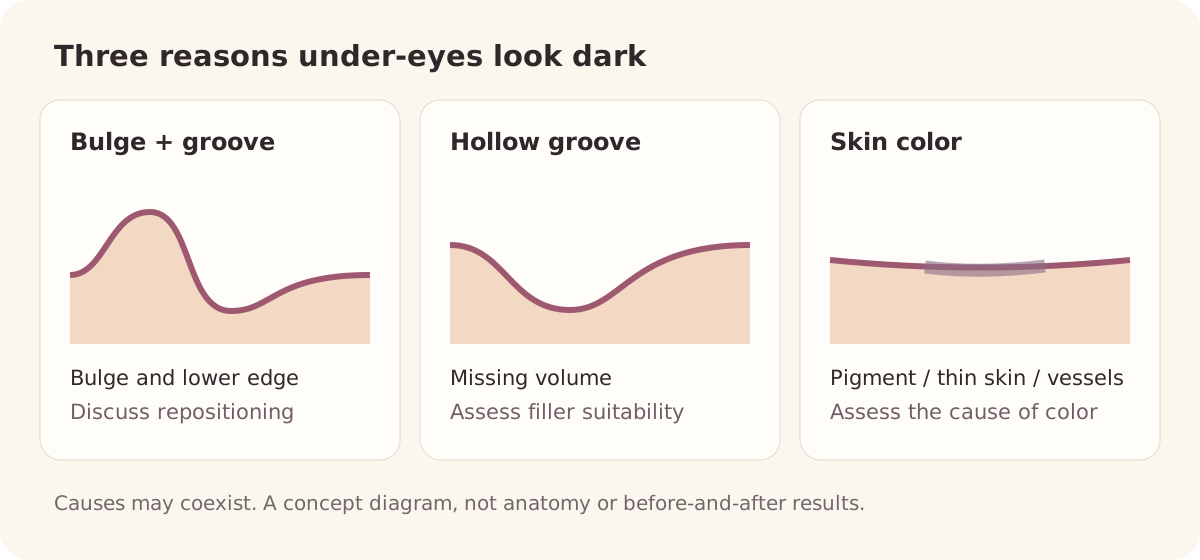
Fat removal and fat grafting are different from repositioning. Removal reduces excess fat. Grafting introduces fat taken from another area. A review of repositioning with fat grafting describes a combined operation.
A transconjunctival approach involves an incision on the inside of the eyelid. Having no incision line on the outer skin does not mean the surgery has no incision. When loose skin also needs correction, the plan may include a skin approach and eyelid-support procedures. NHS eyelid surgery guidance
Will repositioning or filler remove dark circles?
Contour treatment reduces shadows caused by bulges and hollows; dark skin color needs treatment directed at its cause. “Dark circles” describes several different concerns.
| Under-eye appearance | Why it looks dark | What the examination distinguishes |
|---|---|---|
| A dark line below a bulge | A shadow between the bulge and groove | Fat position and groove depth |
| A generally hollow under-eye | Low volume and facial bone structure | Fat volume and cheek support |
| Brown discoloration | Pigmentation, dermatitis or rubbing, among other causes | Pigment depth and skin irritation |
| Blue or purple show-through | Thin skin and visible blood vessels, among other causes | Skin thickness, vessels and any accompanying hollow |
DermNet's explanation of dark circles distinguishes pigmentation, fat changes, edema, thin skin and facial structure. When pigmentation is the main concern, care addresses irritation and inflammation, with medication or laser options considered according to pigment depth and skin condition. Blue discoloration is not automatically treated in the same way as brown pigmentation.
A Babitalk review with an August 18, 2026 repositioning date described satisfaction with a reduced groove, but remaining pigmentation. A GangnamUnni review of repositioning with fat grafting likewise described improvement in bulging and wrinkles while discoloration directly below the eye remained.
Is repositioning used when the under-eye bulges only while smiling?
The surgeon examines how the fat moves during a smile before planning the operation. The small roll just below the eyelashes and a lower fat bulge occupy different positions. Assessment includes a smiling expression and side views, not just one neutral photograph.
A case published by Dr. Youngkee You of ROI Plastic Surgery describes a woman in her late 30s with pronounced bulging on one side while smiling. The clinic attributed the movement to adhesions between the muscle around the eye and the fat. The operation used an inner-eyelid approach to release the attached tissue and reposition the fat.
The clinic presents neutral and smiling photographs before surgery and at day 10, describing a softer bulge and the patient's satisfaction. This is one clinic-published case with follow-up shown through day 10. For a similar concern, ask: “What causes the bulge below the eyelid roll, and will the plan address its shape when I smile?”
Is filler suitable when there is little bulging fat but a hollow under-eye?
Filler supplements missing volume when a hollow is the main concern and fat bulging is limited. It fills the transition between the lower eyelid and cheek to soften the shadow. The amount is planned around the depth and extent of the hollow on each side.
Babitalk, eye filler review 8028106, treatment date April 24, 2026
드라마틱한 변화는 아니였지망 눈밑꺼짐 신경쓰이던게 많이 사라졌어요 ㅎㅎ
English translation: Not dramatic, but much less hollow.
Source: Babitalk under-eye filler reviews. The entire review body is quoted.
GangnamUnni, under-eye filler review, posted October 6, 2026
다크서클이 완전히 없어졌다기보다는 진하게 보이던 음영이 확실히 옅어진 느낌이에요
English translation: Rather than the dark circles disappearing completely, it feels like the shadow has definitely become lighter.
Source: GangnamUnni under-eye filler reviews. One sentence from the review body.
Satisfaction with a less visible groove is different from a change in skin color. With thin skin, filler can also produce a bluish appearance or a visible contour. Thin skin alone is not a reason to choose filler: assessment should include hollow depth, swelling and the intended injection location.
What did GangnamUnni and Babitalk reviewers like or find disappointing?
Repositioning reviews describe smoother bulges and grooves; filler reviews describe a more natural-looking appearance after filling a hollow. The platforms displayed these search-result counts.
| Search term | GangnamUnni | Babitalk |
|---|---|---|
| Under-eye fat repositioning | 9,999+ reviews | 9,999+ reviews |
| Under-eye filler | 9,930 reviews | 955 reviews |
Platform displays as of October 23, 2026. Results also include lower-eyelid roll filler, combined operations and follow-up posts by the same person. The experiences summarized here come from the leading results for these searches and the Babitalk tear-trough search.
Repositioning reviews repeatedly describe less concern when applying makeup after the bulge and the line beneath it softened. Other posts describe disappointment about fat still looking prominent at one month, or an improved groove accompanied by dryness and tightness.
Babitalk, under-eye fat repositioning review, treatment date September 19, 2026
대신 효과가 엄청 만족스럽지는 않아요!
English translation: But I'm not particularly satisfied.
Source: Babitalk under-eye fat repositioning reviews. At one month, the writer reported no bruising or pain but felt that a bulge remained and planned to observe further progress.
Filler reviews describe satisfaction with a less tired-looking appearance after a hollow was filled. Others describe a remaining hollow on one side or disappointment that the area looked hollow again after several days. One person also described under-eye and upper-cheek filler, followed by a touch-up, for a groove remaining after repositioning.
How long do bruising and swelling last, and when can I return to work?
Plan a return around injection marks and swelling for filler, and the extent of surgery, bruising and residual swelling for repositioning. Little pain after anesthesia does not necessarily mean an appearance suitable for every work or social setting.
| Recovery experience in a review | Details |
|---|---|
| Normal activities immediately after filler | Satisfaction with the change, but red injection marks lasted about 3 days |
| Normal activities around day 4 after repositioning | No bruising, with early swelling reduced |
| Residual swelling for about a month after repositioning | Satisfaction with the groove, but discomfort from lingering swelling |
| Work after repositioning with upper-cheek fat grafting | Returned wearing glasses at 1 week, still noticed swelling personally, and reported improvement around 2 weeks |
After filler, swelling and bruising may last days to weeks. Residual swelling or tightness can also remain after returning to daily activities following surgery. Plan separately for lower blepharoplasty involving skin excision. The NHS guidance for eyelid surgery describes about 2 weeks off work, depending on the job.
Mention any client-facing work, photography or wedding date first. Ask separately about work, makeup, contact lenses and exercise, and follow the care instructions for the actual procedure performed.
How long do results last, and when should filler be repeated?
Additional filler is planned around the remaining hollow and existing injections; after repositioning, follow-up assesses the contour and subsequent aging changes. Surgery changes the position of fat, but does not stop later skin laxity or aging.
A review of tear-trough filler studies describes effects lasting 8–12 months in the included research. Some platform reviewers, in contrast, felt hollow again after only days. An examination distinguishes reduced initial swelling from insufficient correction of the intended area.
Visible benefit and the amount of filler remaining in tissue are different. A report of retained filler around the eyes describes 3 patients who developed swelling years after injection. Rather than repeating treatment by the calendar alone, share the previous product, amount and date and base the plan on the current condition.
What if I have previous filler or my under-eyes swell every morning?
Have the previous filler and the cause of swelling assessed before adding more volume. A marked morning-to-evening change or fluid-like under-eye bags calls for an edema assessment alongside the hollow.
A GangnamUnni reviewer described dissolving previous filler that had looked uneven or protruded like a fat bulge, followed by a different treatment. Babitalk also has an account of satisfaction after dissolving under-eye and lower-eyelid roll filler. These removal experiences are separate from satisfaction with a new injection.
Hyaluronic acid filler can be treated with an enzyme injection to dissolve it. Treatment depends on the material, position and remaining amount, and removal itself carries risks. Share the product, dose and date provided by the previous clinic, including when consulting about repositioning surgery. FDA guidance on filler removal and risks
How do the risks of repositioning and filler differ?
After repositioning, eyelid and eye-surface problems are concerns; with filler, concerns include edema, visible material, lumps and vascular problems. Both procedures carry risks of bruising, swelling and asymmetry.
| Procedure | Risks to discuss |
|---|---|
| Repositioning and lower-eyelid surgery | Bleeding, infection, dryness, residual bulging or hollowing, changes in eyelid position |
| Under-eye filler | Persistent edema, uneven contours, blue discoloration, infection and rare vascular occlusion |
An analysis pooling 31 reports involving 2,556 people treated with tear-trough hyaluronic acid filler reported 91.0% satisfaction. Swelling, bruising and lumps were also reported.
| Reaction reported in the research | Pooled estimate |
|---|---|
| Swelling or edema | 19.2% |
| Bruising | 18.4% |
| Contour irregularity or lumps | 5.3% |
| Blue discoloration, or Tyndall effect | 0.9% |
These figures combine studies using different products, techniques and follow-up periods. More than one reaction can affect the same person. Injections use needles or blunt-ended tubes called cannulas; the location, depth and volume are planned as well as the instrument. Review of injection techniques
Blurred or reduced vision, or unusual severe pain after treatment, requires immediate medical attention. White, gray or blue skin near a filler injection also needs urgent evaluation. Contact the clinic while arranging emergency care, and do not drive yourself. FDA emergency warning signs, American Society of Plastic Surgeons eyelid surgery risks
What should I discuss first if I have both bulging and hollowness?
Explain the area that bothers you most and the time available for recovery, then plan around the bulge, groove and skin condition. Current anatomy matters more than age alone.
| Current appearance or priority | Consultation direction |
|---|---|
| Bulging fat with a deep groove below | How repositioning would address both areas |
| A hollow with little fat bulging | Filler location and the amount needed |
| Substantial loose skin and deep wrinkles | Lower blepharoplasty and eyelid-support correction |
| Brown or blue skin color rather than contour | Assessment of pigment, visible vessels and skin |
| Concern about surgery and little time off | Filler suitability, bruising, swelling and scheduling |
| A longer-lasting contour change | Surgical suitability, recovery and any expected residual hollow |
| Swelling or lumps after previous filler | The existing material, remaining filler and whether removal is appropriate |
When bulging and a deep groove coexist, examination considers whether sufficient fat is available and whether another area needs volume support. If both methods are proposed, ask what each will correct and whether they should be performed together or after assessing recovery.
What should I ask during the consultation?
First ask what causes the darkness and exactly which areas will be treated. Then discuss anesthesia, recovery, additional treatment and the total cost.
- “Is my main problem fat bulging, a hollow or skin color?”
- “Will you assess the smiling appearance, loose skin and eyelid support?”
- “Does surgery include only repositioning, or also fat removal, grafting or skin excision?”
- “Which filler will you use, how much on each side, and when is a touch-up considered?”
- “How do my previous filler or eye operations affect this plan?”
- “What anesthesia is used, and when can I work, apply makeup, wear contact lenses and exercise?”
- “Where do I contact you about swelling or shape concerns, or a vision change at night?”
- “What is the total including VAT, anesthesia, follow-up, additional injections or revision surgery?”
A 1 cc filler price and a repositioning surgery fee cover different things. For filler, check the product, total volume for both sides and any touch-up. For surgery, check whether grafting, skin excision or anesthesia adds to the fee. Ask about first-visit or review-writing conditions when requesting the quote.
Conclusion
Under-eye fat repositioning smooths bulging fat and the groove below it, while filler adds missing volume. For dark circles, first distinguish a shadow from skin color. Loose skin calls for assessment of the lower-blepharoplasty scope; recurrent swelling or previous filler calls for assessment of the existing treatment and current condition.
Reviews of both approaches describe satisfaction with smoother under-eyes and a brighter appearance, but also remaining hollows, swelling and smaller changes than expected. Explain your main goal and important dates, and request a plan covering the treatment area, recovery and any additional care.
Frequently Asked Questions
What is the main difference between under-eye fat repositioning and filler?
Repositioning is surgery that moves existing fat; filler is an injection that adds volume. Planning depends on whether a bulge and groove coexist or a hollow is the main concern.
Which is suitable for dark circles: repositioning or filler?
Contour treatment reduces shadows from bulges and grooves, while pigmentation and visible vessels need care suited to the skin condition. When several causes coexist, discuss a separate goal for each.
Does under-eye fat repositioning remove fat?
Its main process moves fat to a different position. Whether removal, fat grafting from another area or skin excision is included depends on the surgical plan.
Should I get filler if thin skin makes my under-eyes look blue?
Have thin skin, visible blood vessels and any hollow assessed together. Even when filler improves the contour, blue show-through and edema remain risks to discuss.
What disappointments appeared in repositioning and filler reviews?
Repositioning accounts describe residual bulges or grooves, swelling and dryness; filler accounts include changes that felt small or short-lived. Check accompanying procedures and the point in recovery when the review was written.
Can I work the day after under-eye filler?
Some reviewers resumed normal activities immediately, while others had injection marks, bruising or swelling. Discuss recovery time separately for client-facing work or photography.
Is swelling completely gone a week after repositioning?
Reviews include return to activities around a week and residual swelling or tightness at a month. Plan around whether skin excision or fat grafting is also performed.
Should under-eye filler be repeated every year?
Additional injections depend on the remaining hollow and existing filler. Share the previous product, amount and date, and have any swelling or lumps assessed first.
Is filler used after under-eye fat repositioning?
Additional correction can be discussed for a remaining hollow. First assess recovery as swelling settles, the remaining fat and skin condition, then plan filler location and amount.
What should I check when comparing prices?
For filler, check the product, total volume for both sides and touch-up terms. For surgery, check grafting, skin excision and anesthesia; compare totals including VAT and follow-up.
Sources and verification dates
- Sources checked October 23, 2026. Review coverage includes the leading 20 repositioning and 40 filler posts on GangnamUnni, and 24 result cards each for repositioning, filler and tear troughs on Babitalk. Results overlap and include combined procedures and lower-eyelid roll filler. They do not represent satisfaction or complication rates for all patients. Necessary excerpts are preserved verbatim without usernames or photographs.
- GangnamUnni under-eye fat repositioning reviewsPostoperative bulges, grooves, recovery experiences and displayed result counts.
- GangnamUnni under-eye filler reviewsHollow and shadow changes, additional injections, dissolving, dissatisfaction and displayed counts.
- Babitalk under-eye fat repositioning reviewsSurgery and combined-procedure experiences, and displayed counts.
- Babitalk under-eye filler reviewsResults mixing under-eye hollow and eyelid-roll procedures, excerpt 8028106 and displayed counts.
- Babitalk tear-trough reviewsGrooves, residual swelling, dryness and remaining pigmentation. Recovery examples: 8062867, 8087302, 8112334 and 8069237.
- ROI Plastic Surgery's published caseDr. Youngkee You, published 2026-05-31. The clinic's own account of a woman in her late 30s before surgery and at day 10.
- DermNet dark-circle guidanceCauses, assessment and treatment directions.
- NHS eyelid surgery guidanceInner-eyelid and skin approaches, and general eyelid-surgery recovery guidance.
- American Society of Plastic Surgeons eyelid surgery risksDryness, bleeding, infection, eyelid-position and vision risks.
- Tear-trough hyaluronic acid filler meta-analysis, PMID 3768441331 reports, 2,556 participants, pooling satisfaction and adverse reactions from literature before September 2022; online publication 2023, print 2024.
- Needle and cannula technique review, PMID 35259144A 2022 systematic review of 42 articles.
- Tear-trough filler efficacy and safety review, PMID 34192769A 2021 literature review of duration, injection techniques and reactions.
- Retained periocular hyaluronic acid and migration casesA 2017 report of 3 patients developing edema years after injection.
- FDA filler risks and emergency warning signsVascular occlusion, skin-color and vision changes, and removal risks.
Editorial responsibilities and relationships
Written by the DermaFocus editorial team without medical-professional review. There is no advertising, affiliate or financial relationship with the clinic mentioned. Individual diagnosis and treatment plans are determined in a medical consultation.